
Fix the swing before buying another upgrade
Missing the same ring over and over does not always mean you need more Speed. Pay attention to where the attempt fails. A web that never connects points to range. A connection that works but drops you short points to movement or release timing. If the launch is fine and the camera goes wild afterward, the trouble is recovery. More Speed only makes a messy route happen faster.
Swing For Eggs starts you with a simple instruction: hold the jump action to swing. Consistent movement comes from everything around that hold. Aim, attach, ride the useful part of the arc, release toward the next ring, and get the camera back under control. Try to see two rings ahead instead of treating each one as a separate emergency.
The four moments of a clean swing
Aim before you attach
Pick a ring that keeps the route going. The closest option can drag you under the course or leave the next ring behind the camera. Look through the current target and check where the following connection sits before you attach.
Hold while the arc is helping
Holding creates the swing, but a longer hold is not automatically better. Stay attached while the arc builds movement in the direction you want. Get ready to let go once you are traveling toward the next ring or a safe landing.
Release into space you already read
Find safety before you release. Your camera should already show the next target. A controlled release keeps the route in front of you and gives you a moment to choose between another web and a landing.
Recover before the next commitment
Level the camera and find the next useful ring after release. It is easy to skip this step when a guardian or carried egg adds pressure. Skip it once, and a small camera mistake quickly becomes a chain of desperate swings.
The rhythm is aim, hold, release, recover. Practice it slowly on a short section. You can tighten the timing once each part feels deliberate.
Use a three-ring reading drill
Choose a route near base so a miss costs almost nothing. Before moving, name three points: the ring you will use now, the one you expect to use next, and a place you can land if the second web fails.
Run that same sequence a few times. Ask one question after each attempt:
- Did the first web connect?
- Did the arc turn me toward the second ring?
- Did I release with enough control to recover?
- Could I land safely when I decided not to force another web?
Stick with the same three rings for a while. Repetition makes the real problem obvious. If you jump between several routes, different gaps and approach angles can make every miss seem random.
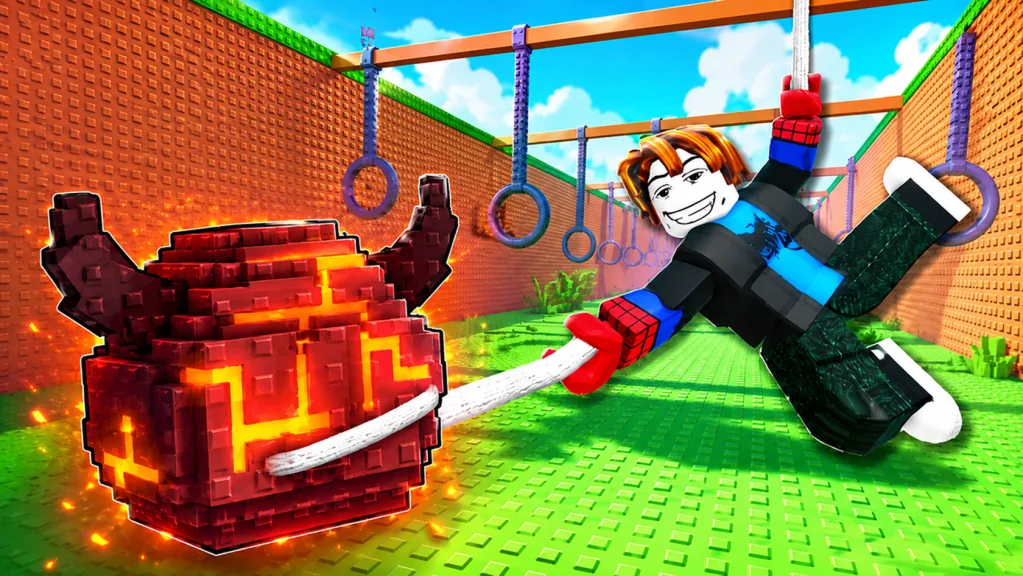
Diagnose misses by what you see
| Failure on screen | Most useful conclusion | Next adjustment |
|---|---|---|
| The web will not reach a ring you are aiming at | Current web range is the limit | Pick a closer ring or inspect the next web range upgrade |
| The web connects, but you fall short after release | The arc lost too much movement | Hold through more of the useful arc or inspect Speed |
| You fly past the route | You released too late or chose a poor target | Let go sooner toward a recovery point you can see |
| The next ring vanishes off-screen | You skipped camera recovery | Turn toward the next target before attaching again |
| The route works one way but not the other | The return angle is different | Practice the reverse line without an egg |
| You panic near a guardian | You planned only as far as the pickup | Choose the first escape ring before taking the egg |
There is no single perfect release time or ring distance. Course layout and your current upgrades change what each move needs. Match the visible problem to the adjustment instead of guessing.
Speed and web range solve different problems
The official description names both Speed and web range. They both affect a run, but they do different jobs.
Web range gives you more possible connections. It matters when you are aiming correctly and a required ring still sits outside your reach. Extra range can also make recovery more forgiving because more rings become available.
Speed changes how much movement you carry through the route. It helps when the web already connects but you cannot clear a gap cleanly or build distance after stealing an egg.
Check the current upgrade screen for prices and displayed values. Spend on a problem you can repeat. If every miss looks different, practice the drill before changing your stats.
Carrying an egg changes the correct route
The quickest outward path can be a terrible way home. Players can knock eggs out of your hands, and the recorded gameplay shows direct escapes turning into fights when several people want the same egg. Once you are carrying, clear sightlines and recoverable webs matter more than shortcuts.
Set up the return before touching the egg:
- Face the first escape ring during the approach.
- Point the camera down the return line instead of staring back at the guardian.
- Stay out of another player’s path.
- Land safely if the next web looks uncertain.
- Return to the normal aim, hold, release, recover rhythm instead of mashing the swing action.
If somebody knocks the egg loose, find the route again before diving for it. Grabbing the egg while facing away from every usable ring usually leads to losing it a second time.
Route practice without wasted runs
Practice movement on its own first. Swing from base through a few rings and come back without taking an egg. Reverse the path on the second pass. On the third, find the safe landing you would use after a missed web.
Add a nest only after the travel feels repeatable. Watch the guardian once, approach with your escape lined up, and use the same swing rhythm on the return. That leaves you with one new decision instead of trying to learn a route, survive a chase, and protect an egg all at once.
The gameplay demonstration shows several areas with movement recommendations. Read the live values in your own server. Those numbers are warnings about the route, not proof that you can finish it. Reaching a nest below a recommendation does not mean you can bring its egg home.
Recover from a bad launch
One bad swing does not have to end the run. Stop trying to save the original line once the camera or arc falls apart.
- Pick a closer ring instead of the perfect one.
- Take a stable platform or known landing rather than one more blind web.
- Turn the camera after landing and rebuild a two-ring plan.
- With an egg in hand, choose the quiet recovery instead of swinging back into traffic.
Good movement is not an endless perfect chain. It is noticing a weak connection early enough to turn it into a safe recovery.
FAQ
What button makes you swing in Swing For Eggs?
The opening instruction tells you to hold the jump action. Release toward the next ring, settle the camera, and hold again once the next useful target is lined up.
Why can I see a ring but not connect to it?
Your web range can be the limit. Try a closer ring from the same position, then inspect the current web range upgrade if the route always stops at that connection.
Does more Speed automatically make swinging easier?
No. Speed helps you travel through a route, but it also leaves less time to correct poor aim. Practice the release and recovery on a short section, then upgrade if lost movement remains the problem.
How should I practice a route for carrying eggs?
Travel it out and back without an egg. Learn the first return ring, one safe landing, and a quieter alternative for times when another player blocks the direct line.
What should I do after missing a ring?
Give up on the perfect chain. Take the nearest safe connection or landing, settle the camera, and build a two-ring plan before speeding up again.